What to Wear and What to Bring in Vatnshellir Lava Cave
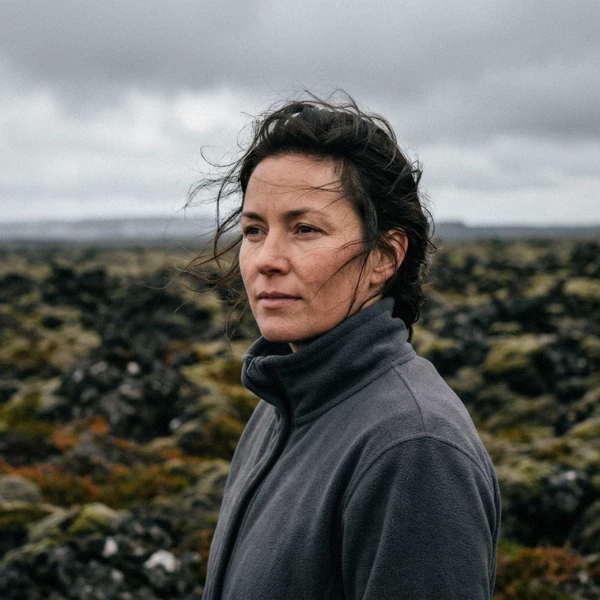
What to wear in Vatnshellir lava cave comes down to two layers and a pair of gloves. The cave holds 4 to 6°C in every month of the year, so there is nothing seasonal about the inside; the helmet and the torch come with your ticket, which leaves very little for you to carry. The part people get wrong is above ground, where you wait on an open lava field with no shelter and the wind averages 30 km/h in January. When I did this in February my hands were the only part of me that was cold, and I had left my gloves in the car. If you have not booked yet, the guided descent has the current price and the day's start times.
Quick answer
Wear a warm mid-layer, a waterproof windproof shell and shoes with real tread, and bring gloves. The cave stays at 4 to 6°C all year and the lighting is limited, so you are dressing for a cold damp 45 minutes rather than for Icelandic winter. The helmet and the torch are handed to you at the hatch.
Key takeaways
- 4 to 6°C inside in every month, July included
- Gloves are the item people forget: you hold cold steel on two spiral staircases
- Helmet and a torch come with the ticket; your own headlamp is not allowed inside
- High heels, flat-bottomed shoes and flip-flops are refused at the entrance
- Hiking boots are ideal, trainers with tread are accepted
- Bring a waterproof shell in any month: rain runs 135 to 205 mm a month here all year
What to Wear
The base and mid layer
A long-sleeved base layer and a fleece or light insulated mid-layer is enough. The cave is cold but you are moving, and 45 minutes is short. What you want to avoid is cotton against your skin, because the air underground is damp and cotton holds that dampness against you for the rest of the day.
I have gone down in a thin merino base and a fleece in February and been comfortable. In July I wore the same thing, because inside the cave July does not exist.
The outer shell
Take a waterproof windproof jacket, and take it even if the forecast is clear. This matters less for the cave than for the ten minutes you spend standing beside the hatch waiting for your group to gather. There is no building, no porch and no windbreak on that lava field. Mean daily maximum wind at the cave runs near 30 km/h in January and near 20 km/h in July and August, and rain averages between 135 mm and 205 mm a month in every single month of the year.
A hard shell beats a thick coat here. Bulk gets in the way on a spiral staircase; wind resistance does not.
Gloves, and why they are not optional
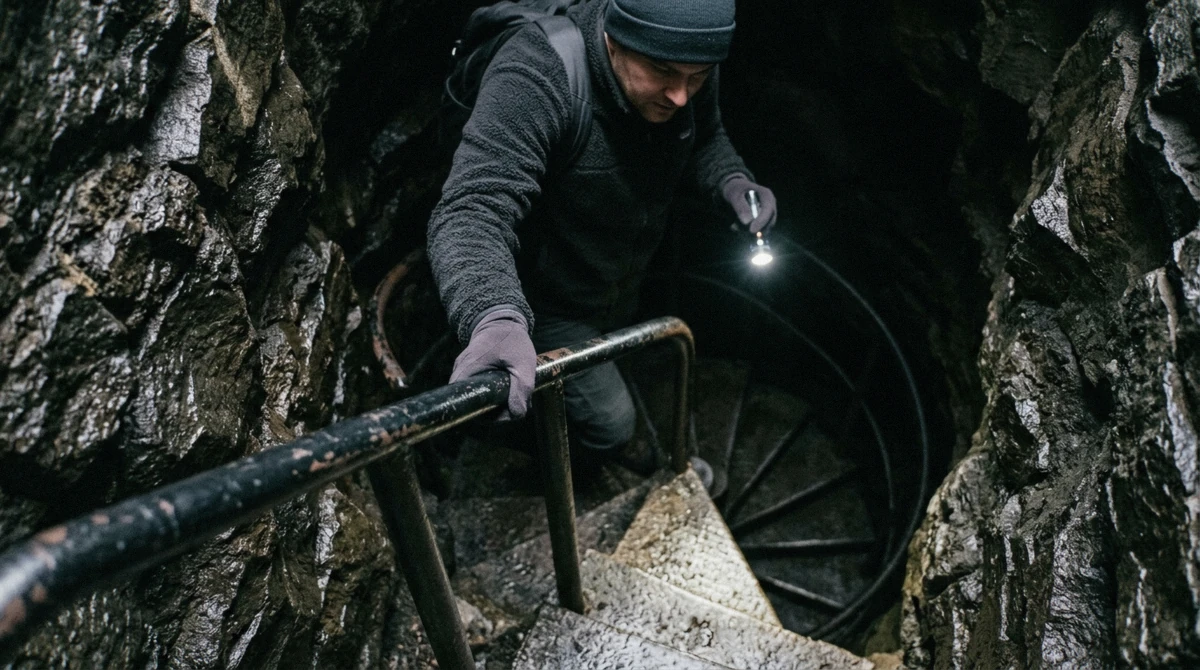
The operator lists gloves as recommended for safety and comfort. That reads like boilerplate until you are halfway down the second staircase with your palm wrapped around a steel handrail at cave temperature.
Thin liner gloves are enough. You want to keep your fingers working, because you are also holding a torch. Anything thick and slippery is worse than nothing.
Footwear, and the three kinds that get turned away
The floor was never levelled. It is bare lava rock, uneven, dry in some places and slick in others, and there is no walkway. Hiking boots are the right answer. Trainers with tread are accepted and plenty of people wear them.
High heels, flat-bottomed shoes and flip-flops are refused at the entrance. That rule exists in writing because people have turned up in all three, and the guide will not take you down in them. If your only shoes are smooth-soled city trainers, you are gambling on a guide's judgement rather than following a rule.
What to Bring
The whole list
Short, because the tour supplies the technical part.
- Gloves: cold steel handrails, two staircases
- Waterproof windproof shell: the wait outside, not the cave
- Warm mid-layer: 4 to 6°C for 45 minutes
- Shoes with tread: unlevelled lava floor
- A hat: the wind on the lava field, not the cave
- Camera or phone: low light, so expect grain
- Water: nothing is sold at the site
- Your booking confirmation: there is no ticket office
What to leave in the car
A daypack is more nuisance than help on a tight spiral staircase, so carry what fits in your pockets. Leave the tripod: you stop where the guide stops, and there is not room to set one up. Leave your own headlamp too, because those are not permitted inside the cave.
What the Tour Provides, So You Do Not Overpack
Handed to you at the hatch
Your guide arrives at the car park with the gear. There is no rental desk and no deposit.
| Item | Provided | Bring your own | Notes |
|---|---|---|---|
| Helmet | Yes | No | Sized for children as well as adults |
| Torch | Yes | No | The only light source in the cave |
| Headlamp | No | Not permitted | Explicitly banned inside |
| Gloves | No | Yes | Recommended by the operator for safety and comfort |
| Warm layers | No | Yes | 4 to 6°C year-round |
| Waterproof shell | No | Yes | For the exposed wait outside |
| Footwear | No | Yes | Tread required; three types refused |
| Crampons | No | Not needed | No ice underfoot in this cave |
| Water | No | Yes | No shop, no vending, no café |
| Toilets | No | n/a | Nearest at Malarrif, three minutes east |
What Not to Wear or Bring
The refusal list
Two of these come from the operator's own rules. The rest come from watching people struggle.
- High heels: refused at the entrance
- Flat-bottomed shoes and flip-flops: refused at the entrance
- Cotton next to the skin: holds the damp for the rest of your day
- A thick puffer: bulk fights a spiral staircase
- Your own headlamp: not permitted inside the cave
- A tripod: nowhere to put it and no time to use it
- A large backpack: leave it in the car
Packing by Season on Snæfellsnes
The cave is a constant, the surface is not
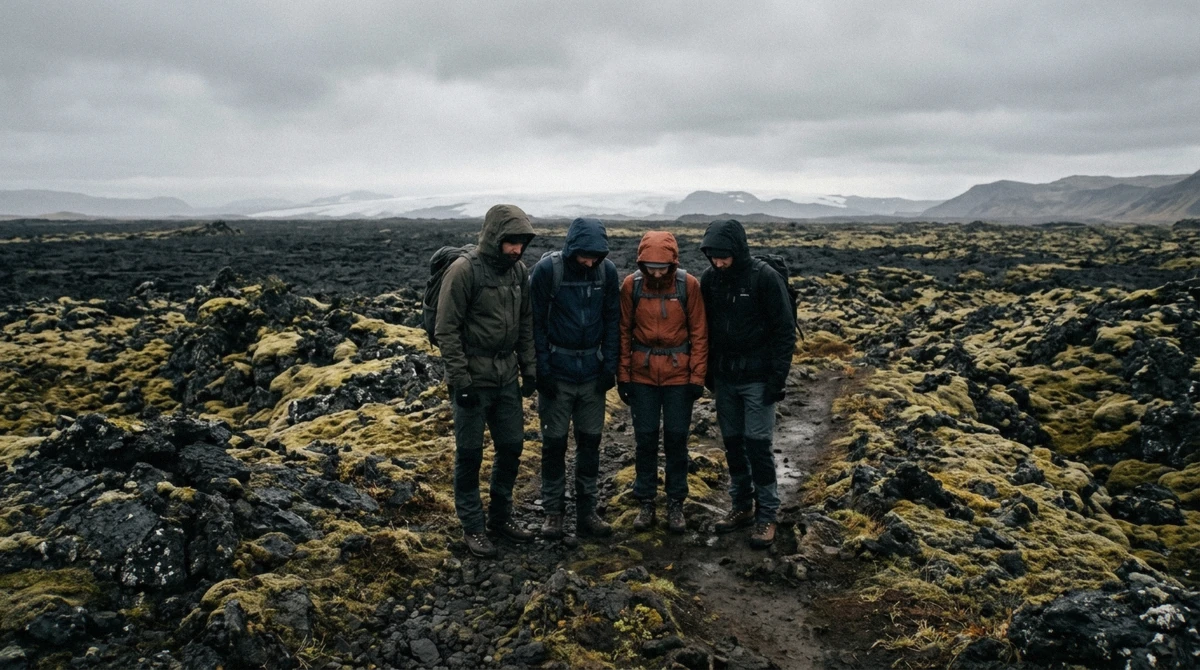
Underground you dress the same way in every month. Above ground the difference between July and January is roughly 11 degrees and a third more wind. These are five-year mean figures measured at the cave's own coordinates rather than at Reykjavík, which sits in a milder spot.
| Season | Mean air temperature | Rain per month | Mean daily max wind | What changes in your bag |
|---|---|---|---|---|
| June to August | 8 to 10°C | 145 to 201 mm | 20 to 21 km/h | Shell plus one warm layer; gloves still needed inside |
| September to October | 4 to 7°C | 136 to 205 mm | 23 to 25 km/h | Add a hat; the wettest stretch of the year |
| November to March | -1 to 0°C | 135 to 175 mm | 27 to 30 km/h | Proper winter shell, warm hat, and shoes that grip ice in the car park |
| April to May | 2 to 5°C | 159 to 172 mm | 22 to 23 km/h | Same as autumn; long daylight returns |
Winter needs one extra thing
Not for the cave. For the car park. The gravel between your car and the hatch freezes, and the ninety-second walk is the only bit of the visit where a slip is likely. Shoes with tread cover it; if you already own microspikes for an Icelandic winter trip, this is a reasonable place to have them in a pocket.
Which month is actually best to come is a separate question, and we work through it month by month.
Two mistakes I keep seeing at the car park
The first is the thick coat. People arrive dressed for an Icelandic winter walk and then spend 45 minutes fighting a spiral staircase in a jacket that catches on the rail every turn. A fleece and a shell does the same job with none of the bulk, and on a 45-minute tour you never get cold enough to want more.
The second is bare hands. Gloves are the cheapest item on this list and the one most often left in the car, mine included. You hold a cold steel rail through two staircases while carrying a torch in the other hand, and the rail sits at cave temperature the whole year. Everything else on this page you can improvise; that one you cannot.
A third, less common: the day bag. There is nowhere to put it, nothing to put in it and no need for it underground. Whatever you carry has to fit in a pocket or ride on your back through a tight turn, and pockets win.
Photographing the Cave in What You Are Wearing
Dress for one free hand
You will be holding a torch. If you also want photographs, you need a jacket with pockets you can open one-handed and gloves thin enough to work a phone screen. The lighting is limited, so most shots are lit by whatever torches happen to be pointing that way, and grain is unavoidable.
The walls are the thing worth photographing, and what is actually on them is worth knowing before you go down so you are not fumbling with settings while the guide is talking.
What to Wear, by Who You Are
If you are on a summer self-drive and packed light
a fleece, a rain shell and your walking shoes cover it. Buy cheap liner gloves in Borgarnes if you have none.
If you are coming in winter
wear what you would wear for a day outdoors in Iceland, and add tread for the frozen car park. The cave is the warmest place you will stand all day.
If you are bringing children
gloves and grippy shoes for them too, and see what the descent is like with kids before you book.
If you only own smooth-soled trainers
borrow or buy something with tread. Two staircases and an unlevelled floor are not the place to test them.
If you are worried about the stairs rather than the cold
read who the guides turn away and why first. Clothing is not your limiting factor.
What to Wear in Vatnshellir: Common Questions
What should I wear for a lava tunnel tour?
A warm mid-layer, a waterproof windproof shell, gloves and shoes with tread. Lava tubes in Iceland sit near freezing all year and the floors are rough rock, so the outfit is the same whether you go to Vatnshellir or elsewhere. The one difference here is the two spiral staircases, which is why gloves earn their place.
How cold is it inside the cave?
4 to 6°C, a few degrees above freezing, in every month. The rock does not care what the surface is doing. In February the cave was warmer than the car park; in July it was the coldest place I stood all week.
Do I need a headlamp?
No, and you cannot use one. A torch is handed to you at the hatch and your own headlamp is not permitted inside the cave. Leave it in the car.
Can I wear trainers?
Yes, if they have tread. Hiking boots are better because the floor is unlevelled lava rock, but the operator accepts sports shoes. What gets refused at the entrance is high heels, flat-bottomed shoes and flip-flops.
Do I need waterproof trousers?
Not for the cave. The floor is dry apart from a few damp patches on the lower level. You might want them for the rest of a Snæfellsnes day, since several of the nearby stops are exposed coast.
Is a helmet included?
Yes. A helmet and a torch come with every ticket, in adult and child sizes, and there is nothing to pay or leave as a deposit.
What about a bag?
Leave it in the car. The staircases are tight and you are only underground for 45 minutes. Pockets are enough.
If you own a fleece, a rain jacket, gloves and shoes with grip, you are already dressed for this. The mistake worth avoiding is the one I made: treating the cave as the cold part and the surface as the easy part, when it is the other way round. Check the departure times, put the gloves in your pocket rather than the boot, and go.